So you’ve decided to purchase an electric mountain bike – great. You won’t regret it! But the next decision you need to make is whether you go for a “Full-Fat” (Full-power) bike, or one of the lightweight models (lower power, but much lighter in weight). Below we’re going to discuss some of the pros and cons of full-power vs lightweight E-MTB – plus see what our friend Hannah thought when she got to do a direct comparison between a full-fat and lightweight bike.
Full-Power E-MTB’s: Pros & Cons
So a full-fat/full-power electric mountain bike is going to offer a few things. Firstly, more power. This means you’re going to be able to get to the top of the trails in record time, conquer hills you’d never usually make it up on your non-electric bike and cover more distance in a shorter amount of time. Sure, you could make life much easier for yourself, but you could also double your descending in half the amount of time it would take on a traditional bike. The second thing is a bigger battery. This means larger/longer range, and potentially more mileage (exact range for any given rider is dependent on a number of factors, including rider weight, conditions, elevation etc).
The thing that some people would consider a downside of full-powered e-bikes is the extra weight. With the addition of a large battery and motor, the bikes obviously weigh a considerable amount more than your standard non-electric bike. Some riders feel that this makes the bike more cumbersome, less playful and harder to manoeuvre.
The flip side of this, is that some riders feel that the additional weight lowering the centre of gravity makes the bike feel far more planted than a standard bike, which can help with confidence over rough/fast terrain.
E-bike sceptics will tell you that you don’t get a proper workout on an E-MTB, but that simply isn’t true. Yes, you could certainly make your life very easy, but if ridden hard, an E-MTB will leave you just as cooked at the end of the ride, just in a different way. Try sprinting once you’re over the 15.5mph limit and see what happens.
Either way, with the ability to turn the bike up and down in power, you can pick how hard or easy you want to make your ride on any given day.
Ultimately, it’s down to rider preference.
Full-Power E-MTB Pros:
- More power provides the ability to cover more ground at ease without getting fatigued
- A bigger battery generally allows for more mileage/elevation before draining
- Lower centre of gravity makes the bike feel planted on rough/fast terrain
- Can get a great workout in lower power modes, or give it a boost when needed
Full-Power E-MTB Cons:
- Heavier weight can make bike feel less playful
- Heavier weight can make bike harder to transport (think putting on bike racks etc)
- Riding in boost/turbo modes is less taxing on the legs, so less desirable for the more fitness-focused rider unless disciplined with the modes
Lightweight E-MTB’s: Pros & Cons
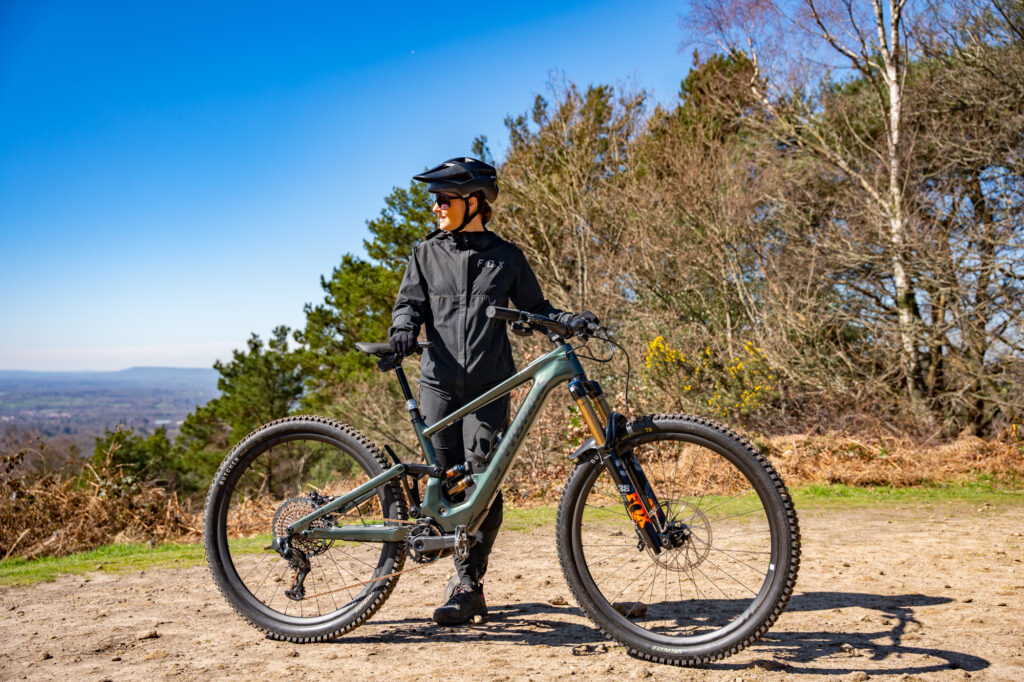
For lightweight E-MTB’s, the main benefit is that they feel far more like your standard “analogue” (non-electric) bike, with the benefit of some assistance to get you back to the top of the trails, allowing you to ride for a greater length of time without gassing out.
The reduction in weight is created by reducing the size of the battery (and motor in some but not all). This, of course, comes with a slight penalty in terms of range and power, but the overall lighter weight tends to allow the battery to last longer than you’d imagine (again, several factors can affect this).
A lightweight E-MTB will feel more “poppy” and playful – closer to how you’d expect a non-electric bike to feel.
Lightweight E-MTB Pros:
- Lower weight allows the bike to feel more like a traditional MTB
- Less support means more of a workout for the fitness-focused rider
- The transition between assisted and non-assisted can feel smoother due to the lower weight of the bike
Lightweight E-MTB Cons:
- Smaller battery will run out faster, especially when run in higher modes
- Can feel underpowered if riding with people on full-fat E-MTB’s
- Steep/technical climbs can be harder to navigate vs full-power bikes
Considerations When Choosing Full-Power vs Lightweight E-MTB’s
1. Ride Feel
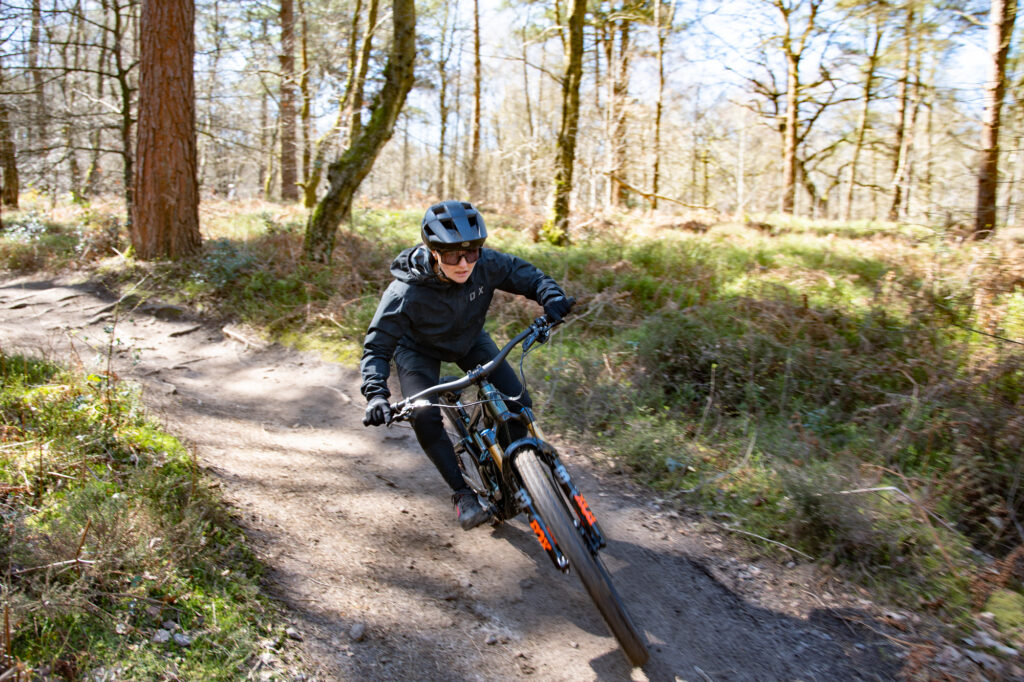
We discussed this one above but just to reiterate – there are differences between how the two bikes will feel. If you want something that feels playful and light, then a lightweight bike is the obvious choice. If you like the idea of a super plush, planted bike that feels like it sticks to the ground then perhaps a full-fat bike is for you. (We’re not saying that a lightweight bike can’t feel planted, but it definitely feels different to the full-fat).
2. Who are you riding with?
More and more people are taking to electric bikes these days, which can mean the type of bikes your riding buddies use may be a deciding factor in E-MTB you choose. If all your friends are on full-power bikes, buying a lightweight bike may make your life harder – you’ll potentially either have to push more or sacrifice some battery life to keep up, which could be a disadvantage.
If you ride with mostly friends on non-electric bikes, sticking to their pace on a full-fat bike will mean less of a workout for you. If you mostly ride alone, the world is your oyster – choose based on how you want the bike to feel and how much riding you want to do.
3. What sort of riding do you want to do?
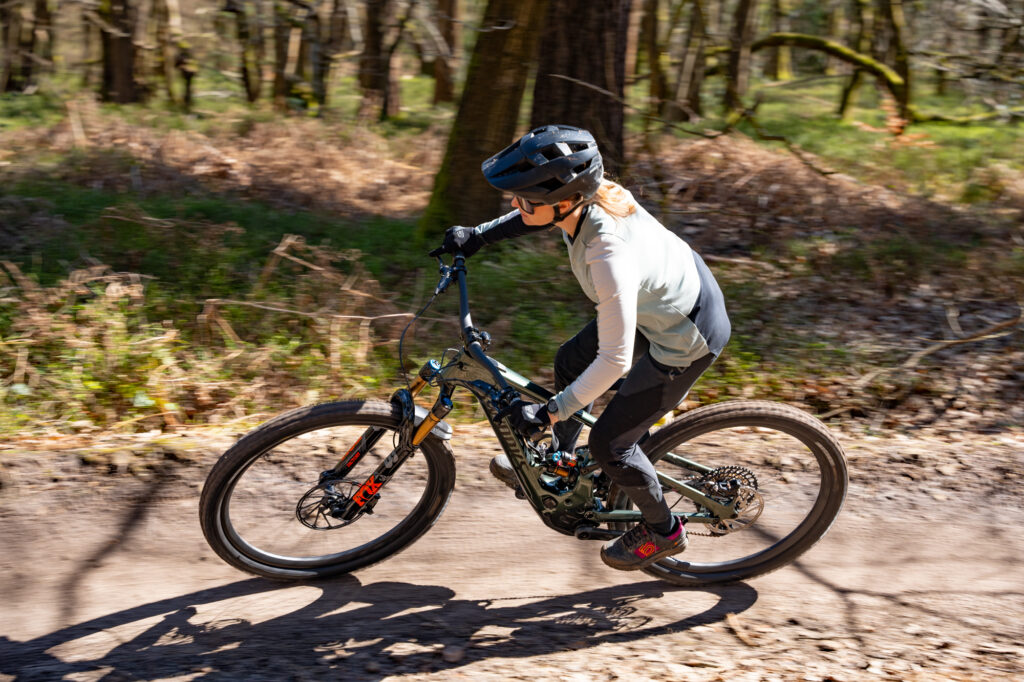
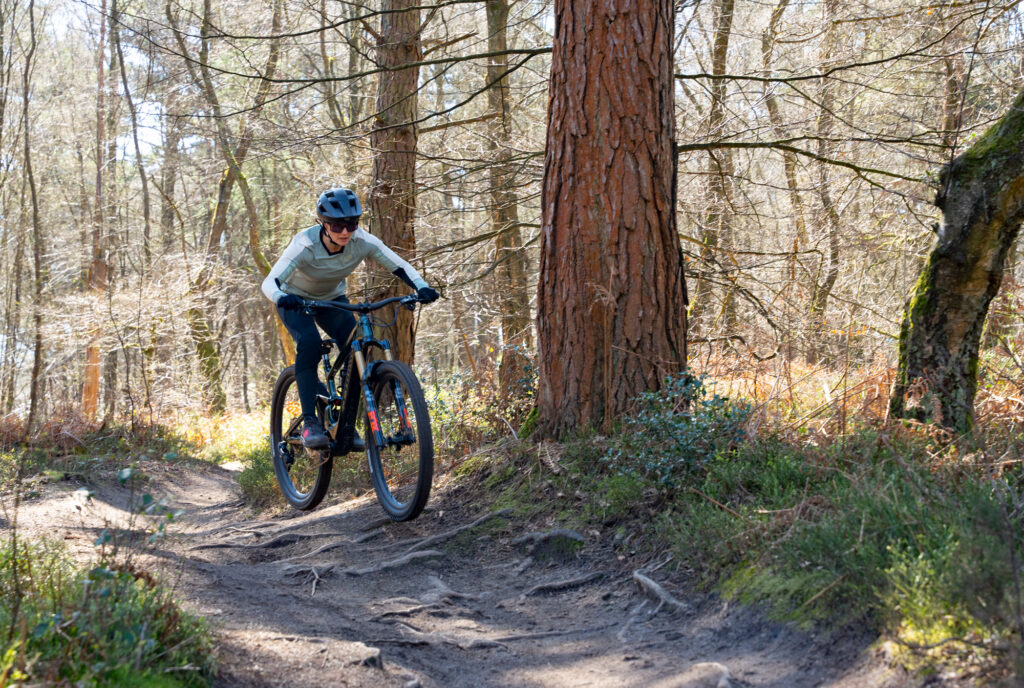
If you’re strapped for time, love the downhills and want to get the most bang for your buck then you can’t go wrong with a full-power bike. In a couple of hours you could cover the amount of trails you’d do in a full day riding on an analogue bike. If you’re pushing hard up and down you still get a great workout and you’ll make huge progress on your skills due to how much more descending you can do.
If you want a little bit of extra assistance but you still want your bike to feel as close to a non-electric bike as possible then the lightweight option could be for you. You’ll still be able to get more trails in but if you love a pedal it will work your legs slightly harder.
4. Transporting the bike
There is an obvious weight difference of up to 5+ kilograms between a lightweight and a full-fat electric bike. Depending on how you’re transporting your bike, this could be a factor in your decision. Getting a full-fat e-bike onto roof bars on a car can be tricky if you don’t have the strength, whereas if you’re just rolling it into a van it’s a whole lot easier.
Frequently Asked Questions About Full-Power & Lightweight E-MTB’s
Which type of E-MTB feels more like a normal bike?
Generally, a lightweight E-MTB is going to feel closer to a standard, non-electric E-MTB. When the weight increases, as it does in a full-power E-MTB, the bike starts to feel more planted or “stuck to the ground”. This changes the ride feel vs a standard MTB, which generally feels more playful. However, the weight of modern full-power E-MTB is reducing, as manufacturers start to find ways to reduce the size of the motor and battery, at no loss of power/range.
Can you ride an E-MTB without power?
Yes, however, it will feel like more of an effort than pedalling a standard, non-electric MTB. The additional weight of the bike will make pedalling feel more sluggish, especially on a heavier, full-power bike. On a lightweight E-MTB, you’ll feel this effect less, which is useful if you happen to run out of battery sooner than your riding buddies! Some modern e-bikes have been designed so you can ride them without the battery in at all if required, which may be of interest if you enjoy riding bike parks. This means you’ll get a lighter ride on the trails, as well as the uplift trailer.
Will a lightweight E-MTB run out of battery faster than a full-power E-MTB?
It depends. For example, if you’re a lightweight E-MTB rider trying to keep up with full-power bikes, then yes, you’ll probably run out faster due to needing to use higher modes to keep on pace. Generally, a bigger battery is always going to equal more range, but don’t forget a full-power bike also has a larger, more powerful motor system that requires more battery to keep running! Range is affected by various factors, not just the battery itself. Rider weight and terrain will also play their part, among other things. A smaller battery doesn’t mean you won’t get a good length ride in though, it just means you might have to put slightly more human-powered effort in to keep rolling for longer.
Which type of E-MTB is best for steep, technical climbing?
A full-power E-MTB wins here, hands down. That extra power and torque compared to a lightweight model is going to give you the grunt you need to get up even the roughest of climbs. That’s not to say you definitely won’t make it on a lightweight bike, but you may find yourself stalling if things get really steep.
Ultimately, no matter which type of E-MTB you choose, you’re almost guaranteed a great time. What’s not to love about being able to double up the amount of trails you tackle per ride? If we’ve swayed you, why not click below to check out our range of E-MTB’s, or head into one of our 12 stores for more info.