Cycling is a fantastic way to get to work or run your errands but let’s face it – if you’re not a regular cyclist the thought of commuting by bike can be pretty daunting. Fitness, time restraints and general logistics can be off-putting when trying to work out if it’s a feasible way to get from A to B.
However, many of the common commuting worries can be put to rest when you throw an electric bike into the mix. E-curious commuters of today are extremely lucky as there is a multitude of different brands, styles and specs available to suit the needs of every rider.
For those who plan to ride the city streets, an electric hybrid bike would be perfect. But should you go for a lightweight bike, or full-powered? What are the benefits of each?
Read on for more, or watch the video below!
Lightweight E-Hybrid Bikes
Lightweight e-hybrid bikes are, as you can imagine, light. In recent years, the lines have blurred somewhat between what defines a lightweight e-bike and what doesn’t, as the motor and battery systems get lighter, without as much loss of power as a consequence. But as a general rule, for an electric bike to be “light”, it will likely feature a smaller battery and a lower-powered motor.
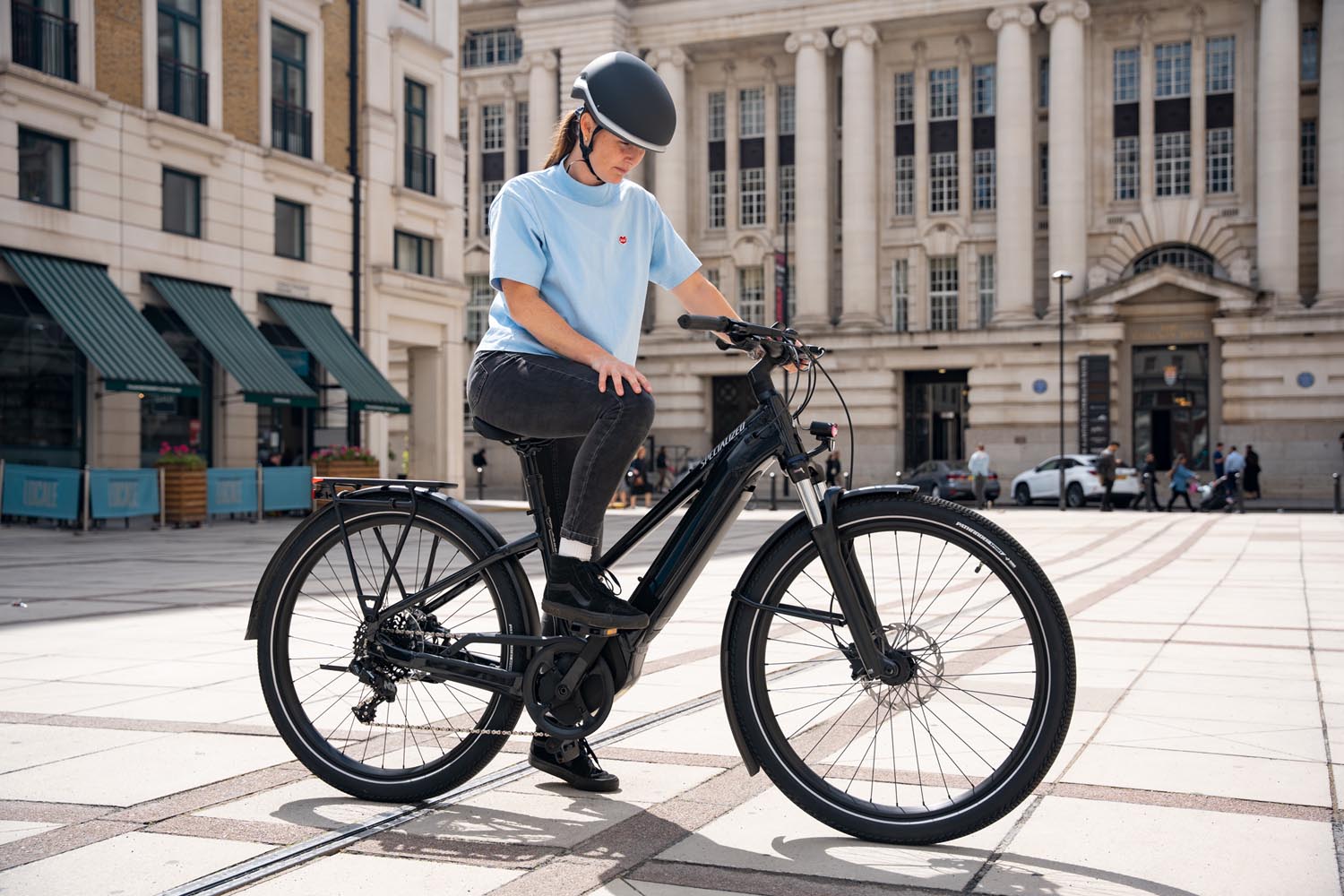
The Specialized Turbo Vado SL shown here is roughly 40% lighter than your average e-bike, which, if you’ve had any previous experience with electric bikes, you will understand can be pretty heavy.
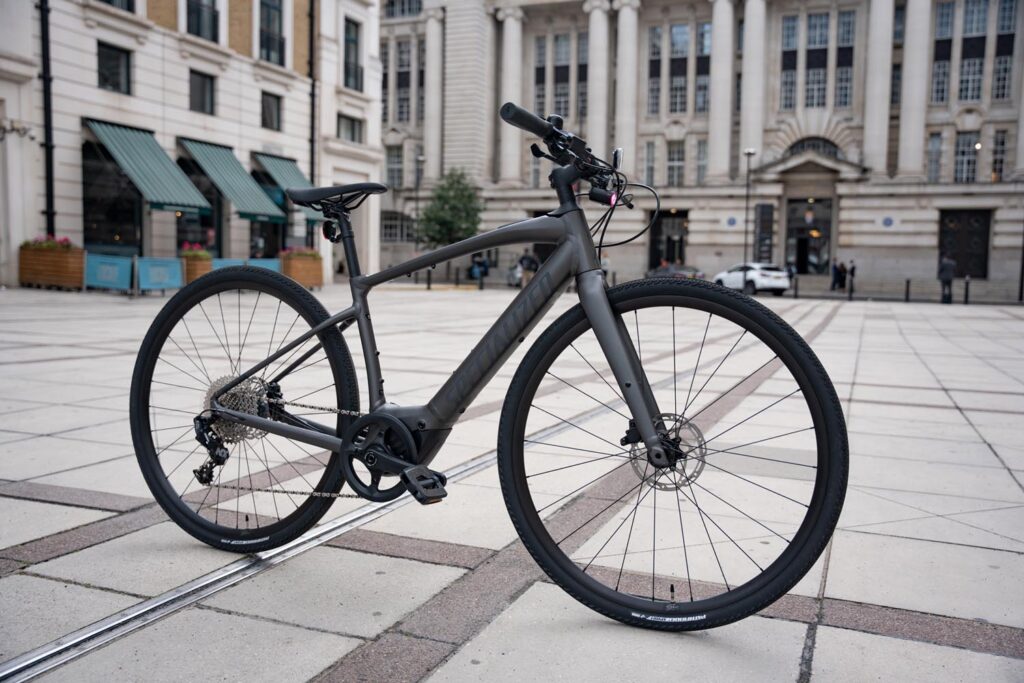
Not everyone has the luxury of a large ground-floor storage area for their bikes (particularly in urban locations), so the weight reduction is fantastic for riders who may have to navigate staircases, lifts or tighter storage locations. Basically, anywhere you might have to manoeuvre the bike in a sub-optimal position. Especially handy if you are on the smaller, lighter side yourself!
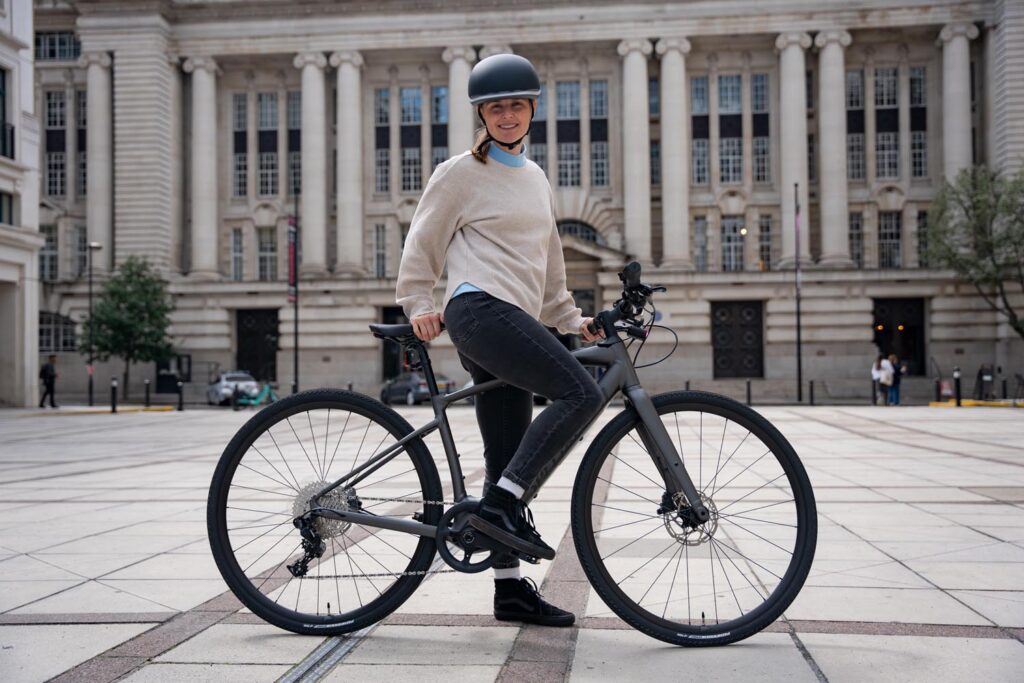
The weight reduction usually comes at a slight trade-off with power/range. The aforementioned Specialized Turbo Vado SL features a smaller battery/motor than its full-powered sibling, the Turbo Vado – this is one of the reasons that it is so much lighter overall.
Being lighter in weight helps to offset the reduction of range that comes from the smaller battery however, and on many bikes, you can add a range extender (usually an extra external battery) if desired.
If you are someone who wants to work on their fitness, but would like a bit of extra assistance for your daily journeys, then the lightweight option could be the way to go. The smaller battery/motor does mean slightly less power, but makes the bike feel overall far more like a non-electric bike and provides a great workout if that’s what you’re looking for. (Stick it in the highest assist mode, though and we assure you it still packs plenty of punch).
Full-Powered E-Hybrid Bikes
The flip-side of the lightweight bike providing a great workout, is that with a full-powered (or full-fat as we sometimes refer to them) bike, you can get from A to B without breaking a sweat if needed. Ideal for those who don’t have any showering facilities at work, or might be saving their legs for other things. Even the steepest of hills will be no problem in Turbo mode!
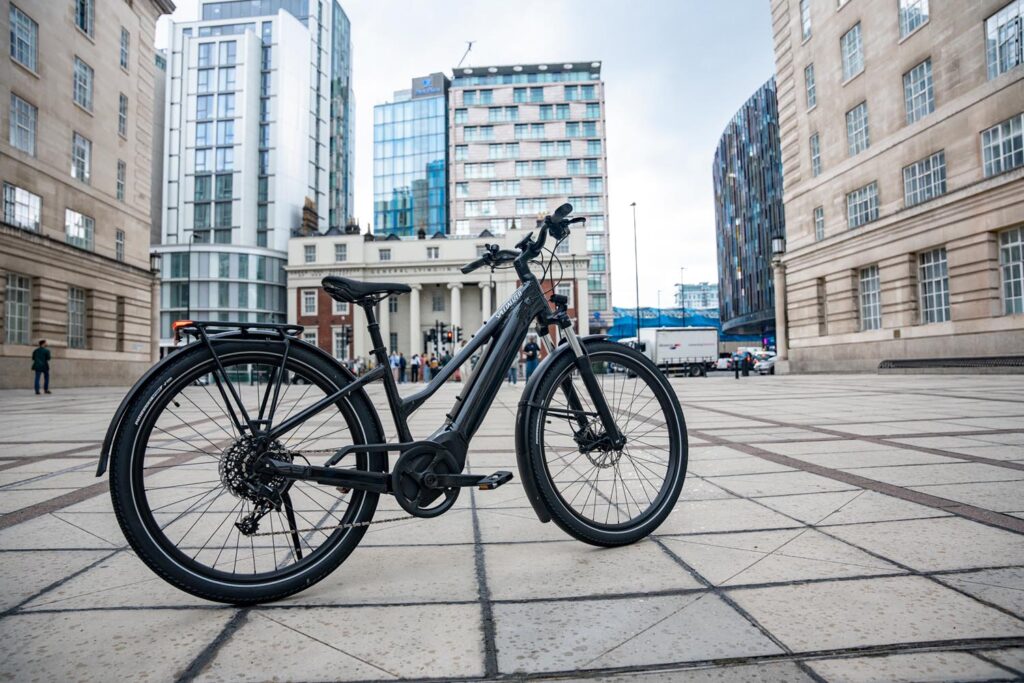
Yes, they may be slightly heavier (which is certainly a consideration if you need to lift the bike into storage, or onto a rack etc), but the range is unparalleled, which means no worrying about running out of battery on a longer journey, and less having to remember to charge the bike if your journeys are shorter!
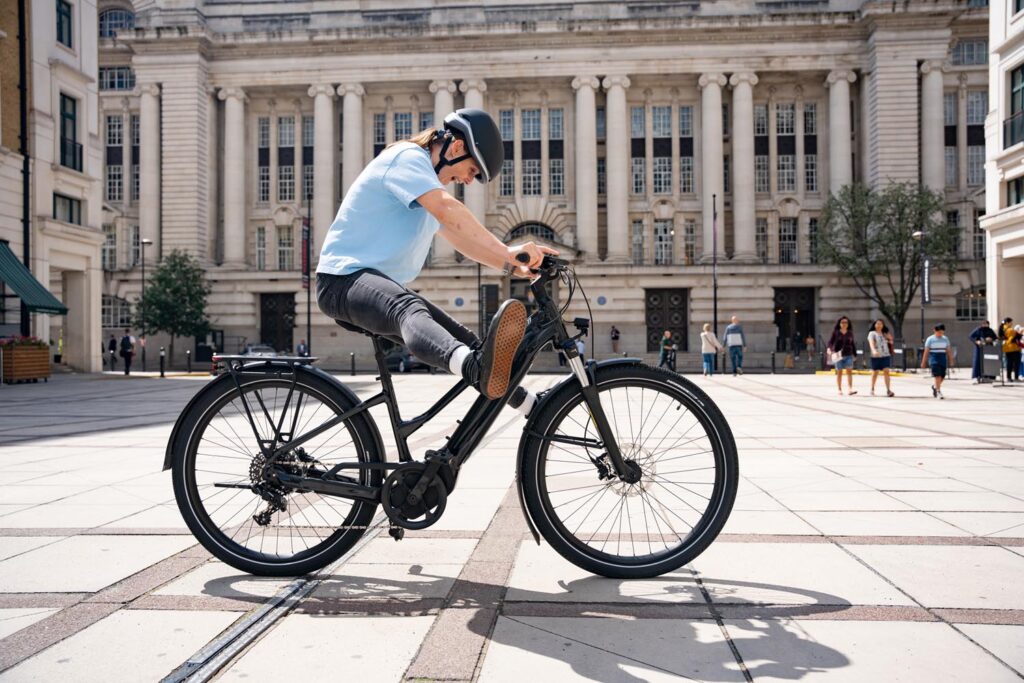
If you’re less concerned about weight and more about convenience, then a full-powered e-hybrid could be the way to go. Load up your bike with racks/panniers if compatible and take everything you might need along for the ride. Or get that shopping home in record speed! The powerful motor of the full-fat bike will allow you to still cruise home with ease.
We hope the above has given you a bit more of an idea of which way you should go if you choose an electric hybrid bike. To shop our full range of e-hybrid bikes, click below and head over to our website
FAQ’s About Lightweight vs Full-Powered E-Hybrid Bikes
How heavy actually is a lightweight E-Hybrid bike?
The weight of any e-hybrid bike will depend on a few factors, including the size of the battery and motor system, and the materials used to make the frame and components. Generally a carbon frame will make a bike lighter, however the weight of the system is what will make the biggest difference. If we use the Specialized Vado SL as an example again, the top-end 6.0 model (which benefits from a carbon frame) sits at just shy of 18kg. The aluminium models weigh around 20kg. So 18-20kg is a fairly standard weight range for bikes of this type. A full-powered e-hyrbid is going to sit closer to 25kg – so the difference is noticeable!
Will a lightweight E-Hybrid bike run out of battery faster?
A lightweight e-hybrid bike has a smaller battery, so naturally this will drain faster. As mentioned above, some of this is offset by the weight reduction of a lightweight model vs full-powered counterpart, but it is definitely something to consider when selecting your bike. Some brands offer range extender options for their lightweight bikes, which would give you some more range and help with battery anxiety when you’re not close to home. But generally, lightweight bikes will still give you plenty of battery to cover most journeys. The Vado SL offers roughly 5 hours of ride time before needing to be recharged.
Are lightweight e-bikes powerful enough?
This is a very common question when working through the decision-making process of purchasing an electric bike. The answer lies in your reason for purchasing the bike in the first place. If your priority is arriving at work without breaking a sweat, then you may prefer a full-powered bike that you can put into its highest power mode and cruise along with minimal effort (you do still need to pedal however, as is the case with all legal electric bikes). If you’re concerned about fitness, then a full-power bike will give you maximum support, too.
If you just want some extra assistance to top up your leg power and speed up your journey, then a lightweight bike should be more than enough power to get you where you need to go.
Is an E-Hybrid bike suitable for a beginner cyclist?
Yes, actually an electric bike would make a great first-time purchase. For a casual rider, if you have no previous cycling background the thought of cycling can be quite daunting from a fitness point of view. With an electric bike you have the reassurance that the motor is there to help you if needed, and remember – e-bikes are pedal assist, they don’t do all the work for you. So you’ll still built fitness!